Single station
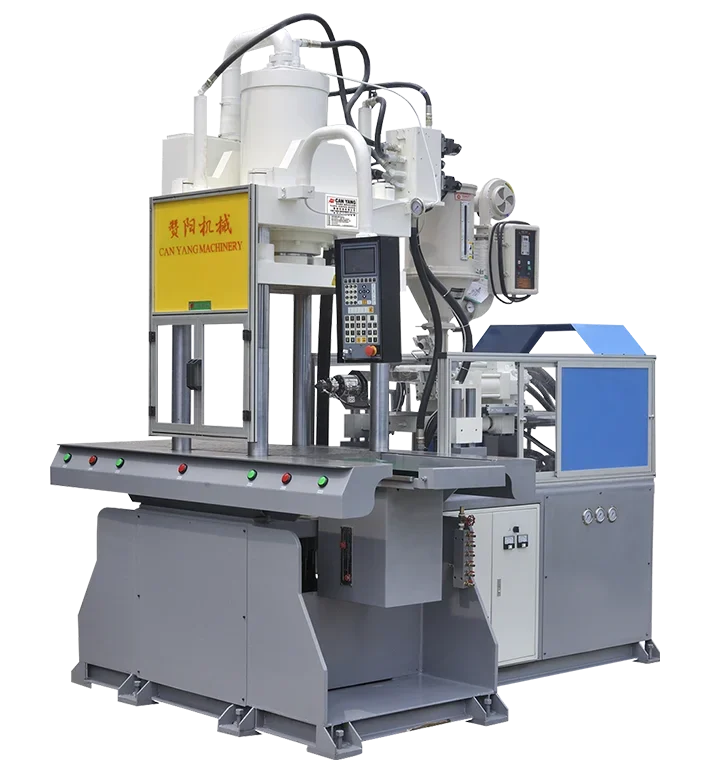
Single Station Vertical Injection Molding Machine
The open working area in its simplest form: place the insert by hand, clamp from above, take the part out. The baseline every other platform is measured against.
What it suits
An old machine still makes the part, and the existing mold has to keep running on whatever replaces it.
The machine on the floor still produces, but spares are hard to find, the control is obsolete, the cycle drifts or the original supplier no longer answers. The plant cannot stop production long enough to learn a new platform from zero. The first risk named is usually that the existing mold will not fit, or will not run the same way.
It fits when the product and the mold stay the same; when the running process is documented well enough to repeat; and when the reason to change is reliability, support or control rather than a new part.
It is not needed when the old machine only needs a control board, a screw or a seal kit. If the product is about to change enough that the mold is rebuilt anyway, that is a new-project decision, not a swap.
The existing machine and mold are read first: platen, mold thickness, opening stroke, ejector and nozzle position, utilities and floor space. The settings that have to be reproduced are agreed and written down. The new machine is built against the mold and tested with it before shipment. On site it is installed, connected and run on the documented process, and the part is compared with the approved sample.
These are worked out with you before a structure is named. Send what you have; the rest is settled in review, before a sheet or a price exists.
We do not promise a cycle identical to the old machine before both are measured under the same conditions, and an existing mold may still need changes. Compatibility is checked against real drawings and the real tool, not assumed from a tonnage figure.
Anything not agreed in writing before the test is not part of the scope.
The open working area in its simplest form: place the insert by hand, clamp from above, take the part out. The baseline every other platform is measured against.
What it suitsLoading, molding and unloading happen at different positions at the same time. For parts whose cycle can be split into parallel work.
What it suitsSmall parts defined by an insert or sealing face, where one configuration and one acceptance record must repeat.
The first review says whether this is the structure for your part, and if it is not, which one is. Nothing here is agreed until it is written down against your own mold.
