Dongguan, China Vertical injection molding machines Technical selection starts with your part →
Machine · Double sliding table

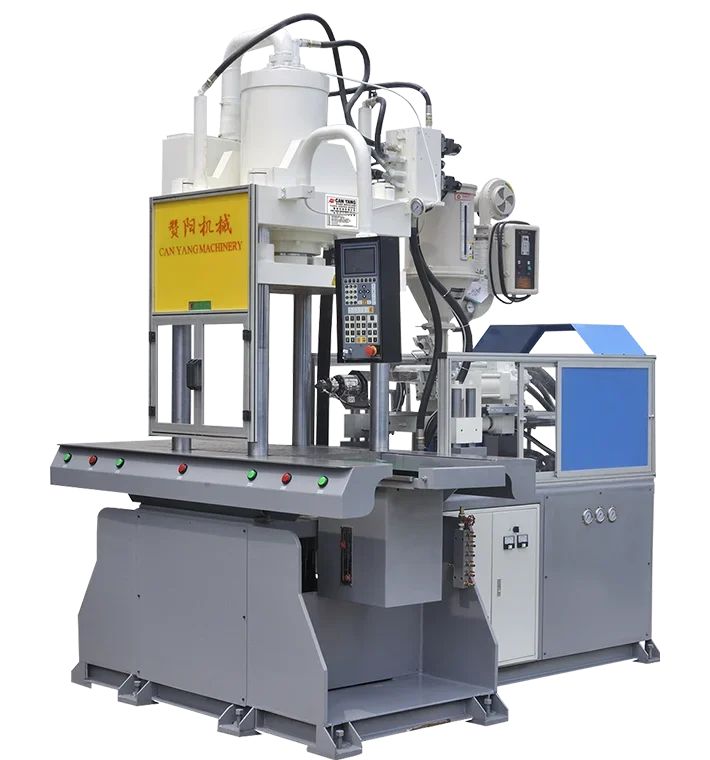
Double Sliding Table Vertical Injection Molding Machine

While one table molds, the other is open for loading. The platform for parts whose insert takes as long to place as the shot takes to run.

Structure
Double sliding table
Double sliding table vertical injection molding machine, front view

What this structure solves

Two tables on one clamp: one side molds while the other is open for the insert. It replaces a single station when loading time has caught up with molding time.

Two tables ride on one clamp. While the left table is inside the clamp being molded, the right table is outside it, open, with the operator laying the next insert. When the shot ends the tables swap, and the machine starts again on a part that is already loaded.

That arrangement is worth its floor space in one case only: when the loading time approaches the molding time. If loading is a few seconds against a long cooling time, a single sliding table does the same job for less. If loading is longer than molding, two tables stop being an optimisation and become the only way to keep the clamp busy.

Typical parts

  • Cable ends and plugs molded onto a cable, loaded and checked by hand
  • Connectors and terminal overmolding where the insert must be inspected before the shot
  • Metal inserts with a long load time — nuts, bushings, brackets
  • Parts whose handling, not whose cooling, sets the cycle

Specification

Specifications are confirmed per application.

No confirmed rows are on file for this platform yet. Clamping force, shot weight and mold space follow from your part, your mold and the way the insert is loaded, so a table of placeholder numbers would be a guess. These four are settled with you first:

  • Clamp unit Clamping force, platen size and daylight, read against your mold.
  • Injection unit Shot weight, screw and barrel, from the part and the plastic grade.
  • Mold space Mold size, thickness and weight, and how it sits on the platens.
  • Station layout One station, a sliding table or several stations, from the loading method.

Request the Double sliding table specification sheet

What we need from you

These are the inputs a selection is worked out from. Send what you have; the rest is settled in review.

  1. Part photo and 2D drawing, 3D data if it exists
  2. Net plastic weight per part, cavities and runner
  3. Insert drawing, material and how it is held in the mold
  4. Mold size, shut height, mold weight and opening stroke
  5. Target cycle, operator count and how the part leaves the mold

Send your part drawing.

The part, the insert and the mold data decide the machine. Send them and the sheet comes back against your own mold, not against a catalogue page.

Contact Zanyang