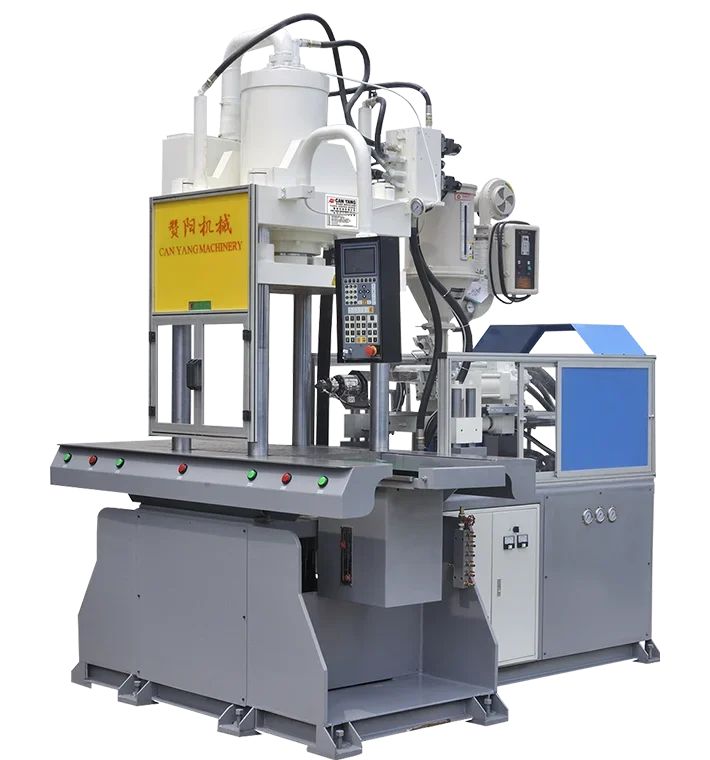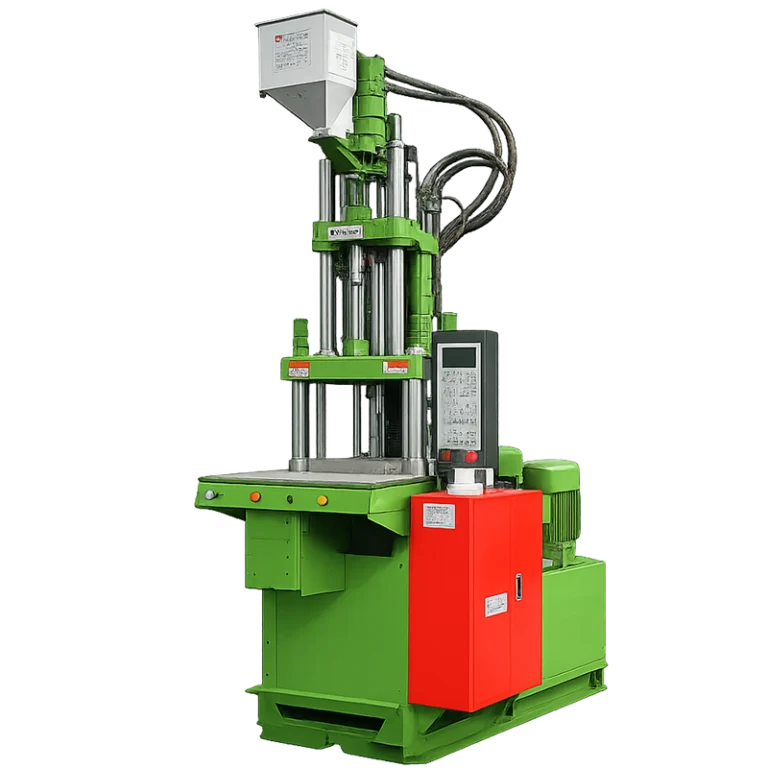
Sliding table
Sliding Table Vertical Injection Molding Machine
Loading happens outside the clamp while the machine keeps its cycle. The first step up from a single station, without paying for a second table.
What it suits
A second plastic body is molded onto a part that already exists, and that boundary is where the difficulty sits.
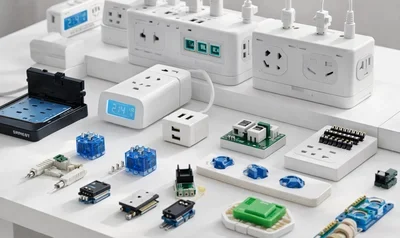
The finished part needs a soft grip, a strain relief, a seal or a color break on a component that already exists, and today that comes from a second operation with adhesive or a hand-fitted boot. The route adds handling and leaves joint quality to the operator. The question is whether the two can be molded as one piece without deforming or crushing the substrate.
It fits when a soft or differently colored layer has to sit on a rigid substrate; when the substrate can be held through clamp-up without damage; and when the bond or the seal is a functional requirement rather than a cosmetic detail.
It is not needed when the second layer is only decorative and a clip-on cover or printed marking does the same job, or when the substrate cannot take the melt temperature. Low volumes rarely justify a tool built around it.
The substrate is placed and located in the cavity, and the shut-offs close on it where the plastic has to stop. The overmold material is injected against the substrate surface and packed while the bond forms. The part cools inside the tool with the two materials held together. The tool opens, the part comes out with the joint intact, and the boundary is checked for flash or a short shot before the next cycle.
These are worked out with you before a structure is named. Send what you have; the rest is settled in review, before a sheet or a price exists.
We do not promise a peel or bond value before the material pair and the tool are fixed. An existing tool may need changes before it runs a new overmold material, and seal performance is verified on molded parts, not stated in advance.
Anything not agreed in writing before the test is not part of the scope.
Loading happens outside the clamp while the machine keeps its cycle. The first step up from a single station, without paying for a second table.
What it suitsWhile one table molds, the other is open for loading. The platform for parts whose insert takes as long to place as the shot takes to run.
What it suitsA terminated cable is laid in an open lower mold and the plug body is molded around it.
A housing, coil or cable end is enclosed by a short flow, using a barrel matched to a small shot.
The first review says whether this is the structure for your part, and if it is not, which one is. Nothing here is agreed until it is written down against your own mold.