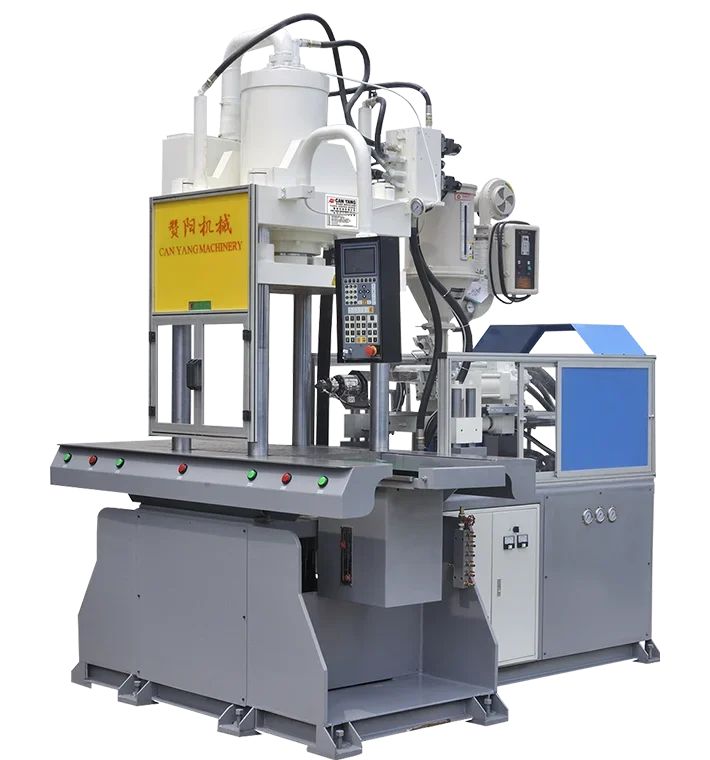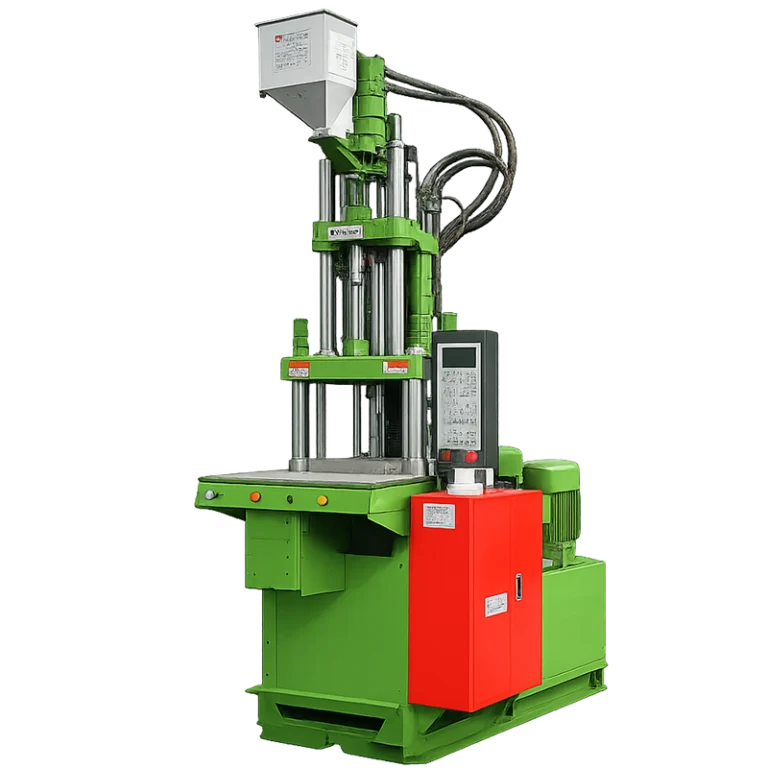
Sliding table
Sliding Table Vertical Injection Molding Machine
Loading happens outside the clamp while the machine keeps its cycle. The first step up from a single station, without paying for a second table.
What it suits
Two lower halves move under one clamp, so loading and the shot stop competing for the same minutes.
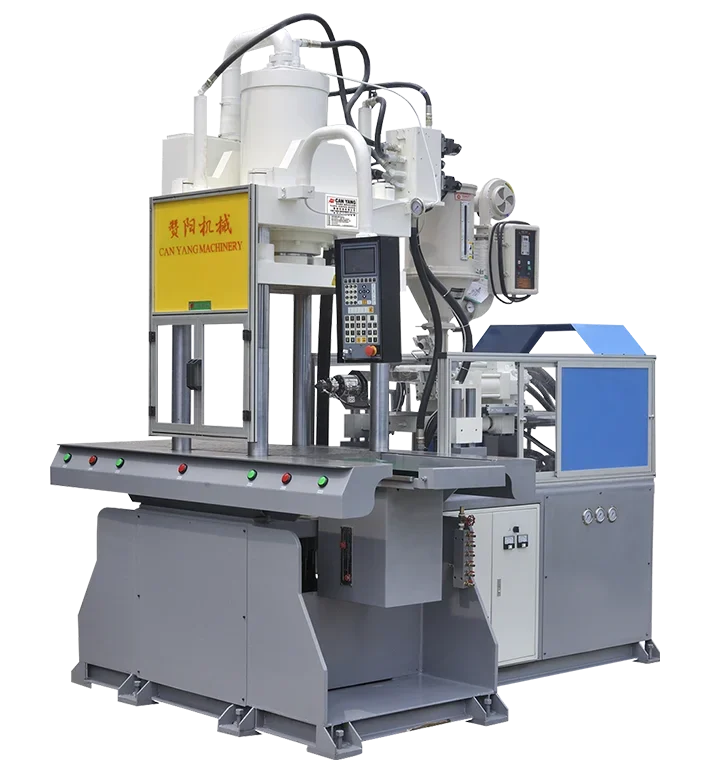
The operator loads the part by hand, so the press waits whenever a seating step takes longer than the shot. On a part with several inserts, or one that has to be lined up before clamp-up, the machine sits idle for a large share of the cycle. Loading, not the machine, sets the output, and the operator reaches into the clamp area to do it.
It fits when one operator loads and the loading task is longer than the mold's closed time; when the nest has to be open at a comfortable height rather than reached into; and when the part still needs a visible check before the clamp closes.
It is not needed when loading takes only a few seconds and the clamp is the real limit, or when the part is small enough to load inside the closed time on a single station. The extra moving mass is worth carrying only if loading is the bottleneck.
The table moves out and the operator seats inserts in the exposed lower half while the clamp is closed on the other half. The loaded half is carried in under the clamp, the clamp closes and the shot is injected. During injection and cooling the operator loads the second half, outside the press. The clamp opens, the table moves out, the finished part is taken off and the loaded half goes back in.
These are worked out with you before a structure is named. Send what you have; the rest is settled in review, before a sheet or a price exists.
We do not promise that a sliding table shortens the cycle: it removes waiting only where loading is the bottleneck. The gain depends on loading time, cooling time, table positioning and how consistently the operator keeps the sequence.
Anything not agreed in writing before the test is not part of the scope.
Loading happens outside the clamp while the machine keeps its cycle. The first step up from a single station, without paying for a second table.
What it suitsWhile one table molds, the other is open for loading. The platform for parts whose insert takes as long to place as the shot takes to run.
What it suitsA terminated cable is laid in an open lower mold and the plug body is molded around it.
A nut or bracket sits in the lower half while plastic is molded around it, so load stays in metal.
The first review says whether this is the structure for your part, and if it is not, which one is. Nothing here is agreed until it is written down against your own mold.