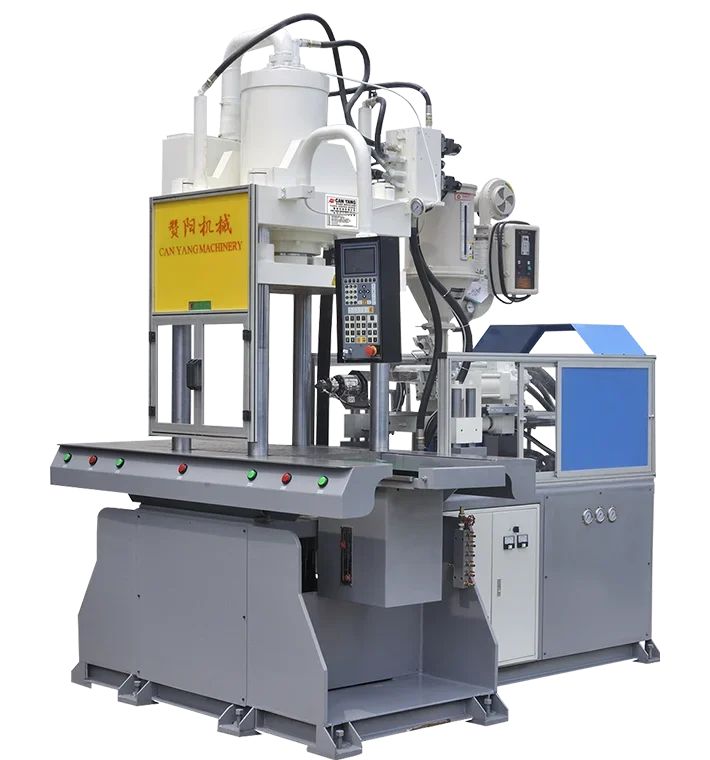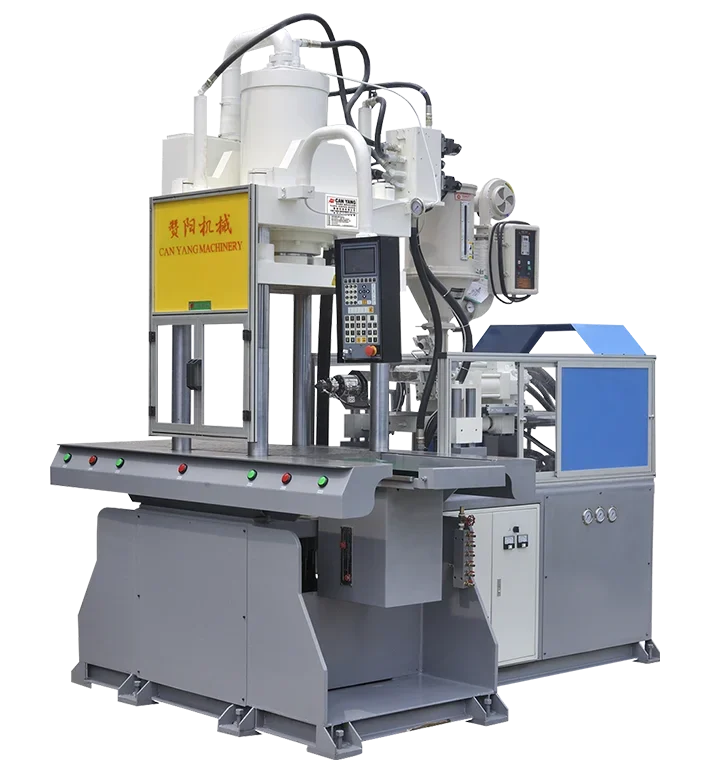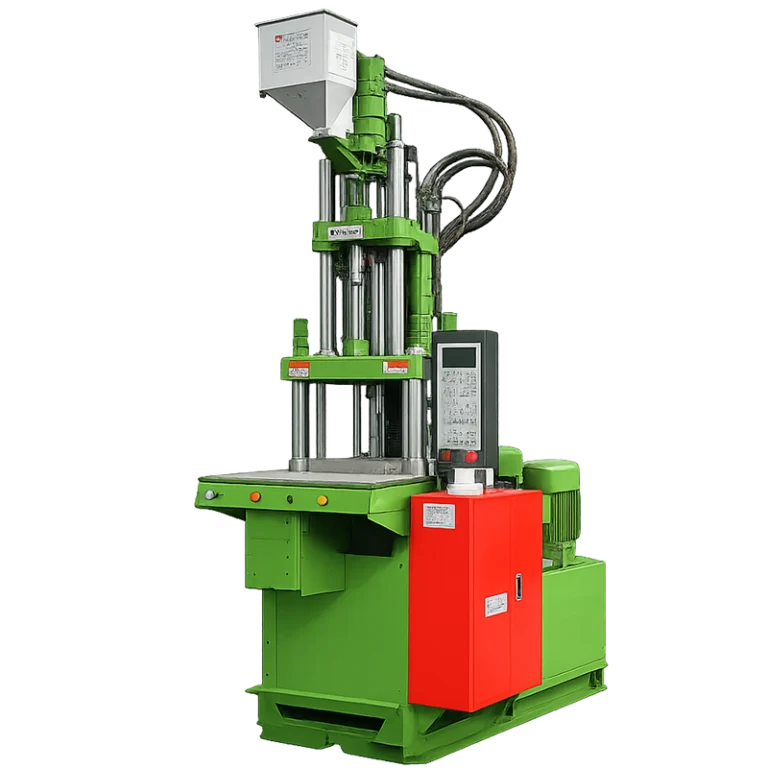
Sliding table
Sliding Table Vertical Injection Molding Machine
Loading happens outside the clamp while the machine keeps its cycle. The first step up from a single station, without paying for a second table.
What it suits
A nut or bracket sits in the lower half while plastic is molded around it, so load stays in metal.
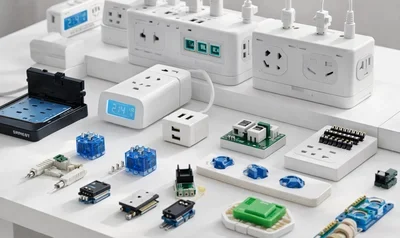
Threaded nuts and studs molded into housings, threaded bosses, bushings and sleeves. Metal brackets with molded grips, handles over steel cores, filter housings and lock plates. The insert usually carries the thread, the load or the mounting point.
PA6/PA66, PBT, PP, PC and ABS for the plastic body; inserts are usually steel, brass, aluminum or zinc alloy. Shrinkage and thermal expansion of the two materials meet at the insert boundary.
A metal insert has mass and a direction, so a vertical clamp lets gravity do the positioning: the insert drops into a machined pocket or over a locating pin in the fixed lower half and stays there while the upper half descends along the same axis. The open parting line lets the insert be checked for seating and orientation from above, with the hand outside the closing area. On a sliding table the loading position sits outside the clamp altogether, so the pockets are filled and checked in a separate zone and the loaded half is then carried in.
Inserts are dropped into pockets or onto locating pins in the lower half, held by gravity or a spring-loaded pin, and checked by eye or by a proximity sensor. Heavier or preheated inserts go in with tongs or a loading jig. Where the insert is large, loading is moved off the clamp on a sliding table so the operator never works under the press.
Whether the insert is still where it was placed once injection pressure arrives. Whether plastic reaches around it without voids while the thread stays usable. Whether a worn pocket lets the insert sit off position later in the tool's life, and whether the part can be taken out without pulling the insert.
Loading happens outside the clamp while the machine keeps its cycle. The first step up from a single station, without paying for a second table.
What it suitsWhile one table molds, the other is open for loading. The platform for parts whose insert takes as long to place as the shot takes to run.
What it suitsThe insert can shift under injection pressure, plastic can fail to fill a thin section around it, flash can appear at the interface, and sink marks can show on the opposite face. A pocket or locating pin wears, and the insert gradually sits less true. Whether this happens is decided by how the insert is supported at clamp-up, gate position, wall thickness, melt and mold temperature, material shrinkage and how the insert is handled between tray and tool.
Naming a risk is not the same as removing it: which of these applies to your part is settled in technical review.
The insert goes into the mold before the shot, so plastic forms around metal instead of being assembled onto it.
Read the solutionTwo lower halves move under one clamp, so loading and the shot stop competing for the same minutes.
Read the solutionA photograph of the part with the insert in place, the plastic grade and the mold size start the review. Which of the points above applies to your part is settled there, not on this page.